
Key takeaways
- As of 2026, a fractional CFO costs roughly $175 to $500 an hour, or about $3,000 to $12,000 a month on a retainer, with one-time projects priced by scope.
- Fractional CFOs charge four main ways: hourly, a monthly retainer, a one-time project or audit, and occasionally equity, which is rare for established ecommerce brands.
- For an ecommerce brand, price tracks revenue and complexity: a single-channel brand under $3M pays far less than a multi-channel, inventory-heavy business at $10M or more.
- Smaller brands don’t have to start with a retainer. Hourly advice and a fixed-scope profit and cash audit are common entry points under about $1M in revenue.
- A full-time ecommerce CFO costs $350,000 or more all-in as of 2026, so a fractional CFO delivers senior judgment for a fraction of that.
- The way to judge the cost is against the decisions it improves, an inventory buy, a pricing call, a financing choice, rather than against the size of the business.
A fractional CFO costs about $175 to $500 an hour, or roughly $3,000 to $12,000 a month on a retainer, as of 2026. What you pay comes down to your revenue, how complex your business is, and how often you need them. Here’s how the pricing works, and what a brand your size can expect to pay.
How much does a fractional CFO cost?
As of 2026, a fractional CFO, a senior finance leader who works with your business part-time and ongoing, typically costs $175 to $500 an hour, or about $3,000 to $12,000 a month on a retainer, with one-time projects and audits priced by scope. What you pay depends on your size, your complexity, and how often you need them.
Those are wide ranges because a fractional CFO can be a few hours on a single decision or a standing weekly presence, and the price moves with it. If you’re still weighing the role itself, our fractional CFO guide covers what one is and does; this page is about the money.
The rest of it breaks the pricing into parts: the ways a CFO charges, what a brand at your revenue pays, the factors that move the number, and how it stacks up against a full-time hire. Start with the shape of it.
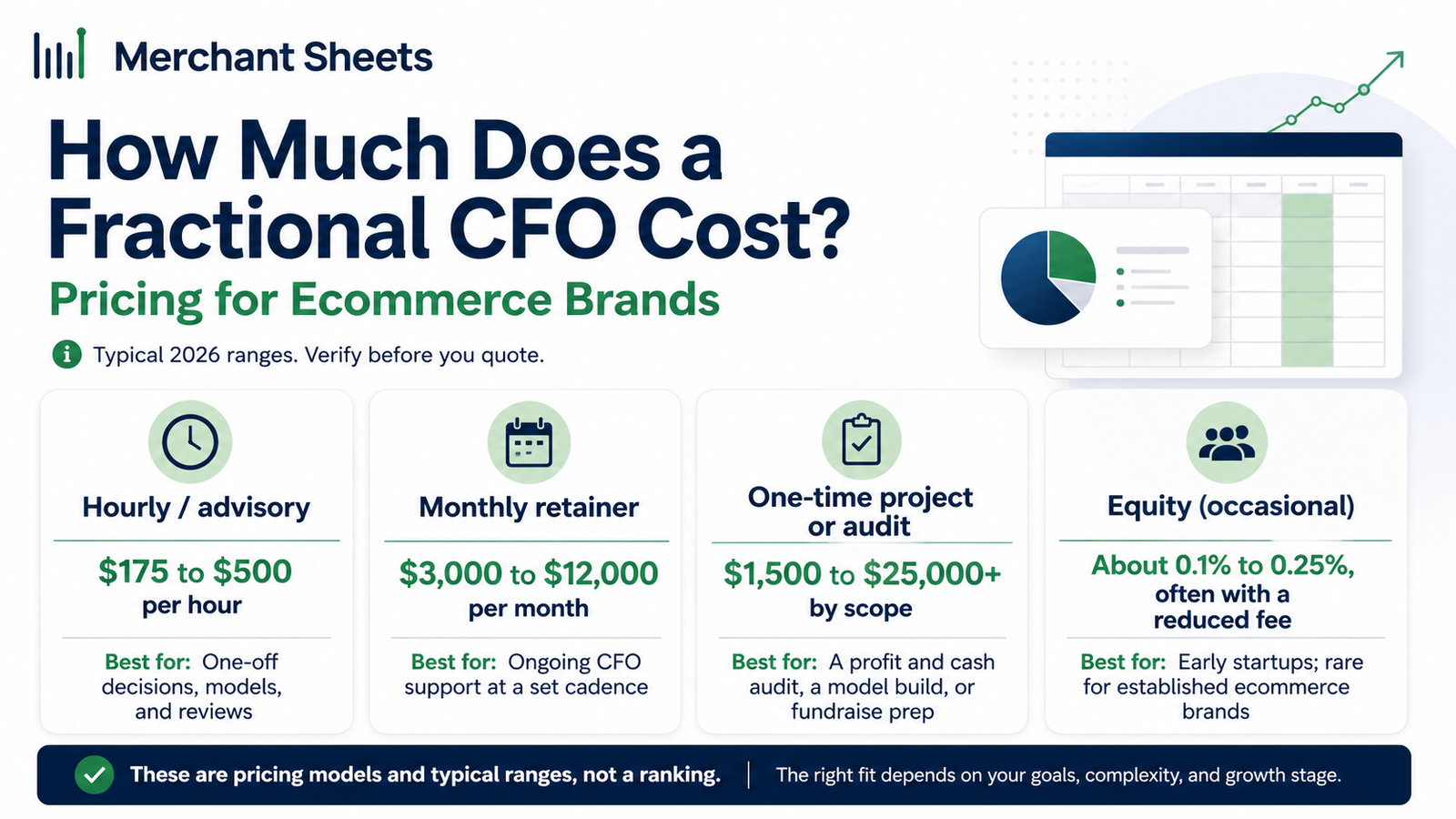
Table 1. How fractional CFOs charge, with typical 2026 ranges.
| Pricing model | Typical 2026 range | Best for |
| Hourly / advisory | $175 to $500 per hour | One-off decisions, models, and reviews |
| Monthly retainer | $3,000 to $12,000 per month | Ongoing CFO support at a set cadence |
| One-time project or audit | $1,500 to $25,000+ by scope | A profit and cash audit, a model build, or fundraise prep |
| Equity (occasional) | About 0.1% to 0.25%, often with a reduced fee | Early startups; rare for established ecommerce brands |
The four ways a fractional CFO charges
Most fractional CFOs price one of four ways, and the right one depends on how much help you need and how steady it is:
- Hourly or advisory: You pay for time on a single decision or model, commonly $175 to $500 an hour as of 2026, with no ongoing commitment. It’s the cheapest way to start and the easiest to scale up or down.
- Monthly retainer: A set monthly fee, usually $3,000 to $12,000 in 2026, buys a defined cadence and scope. It’s the standard for ongoing support, and the effective hourly rate drops below one-off hourly work as the relationship deepens.
- One-time project or audit: A fixed fee for a defined deliverable, from around $1,500 for a scoped audit to $25,000 or more for a full model build or fundraise support. It’s how many brands start before any retainer.
- Equity or a hybrid: A small stake, often 0.1% to 0.25%, sometimes traded for a lower cash fee. It shows up with early startups and is uncommon for established ecommerce brands, which usually prefer to pay cash and keep their equity.
What a fractional CFO costs by revenue stage
The single biggest driver of price is your size, so the clearest way to price the decision is by revenue band. The ranges below are typical monthly retainers for an ecommerce brand as of 2026.
A business with more channels or heavier inventory sits toward the top of its band, a simpler one toward the bottom. And under about $1M, most brands are better served by hourly help or a one-time audit than a standing retainer.
Read the bands as a starting point rather than a quote. Plenty of brands blend models, a light retainer plus hourly for the occasional deep project, and a brand punching above its revenue in complexity pays more than its band suggests.
The number that matters is the one set against your own decisions, which the factors in the next section move up or down.
Table 2. Typical fractional CFO cost by ecommerce revenue stage (monthly retainer, as of 2026.
| Brand revenue | Typical monthly cost (2026) | What the engagement usually covers |
| Under $1M | Hourly or a one-time audit, not usually a retainer | A specific decision, a model, or a profit and cash audit |
| $1M to $3M | $2,000 to $5,000 per month | A rolling cash model, monthly reporting, and the key decisions |
| $3M to $10M | $5,000 to $8,000 per month | Full forecasting, scenario work, and a monthly management pack |
| $10M and up | $8,000 to $15,000+ per month | Deeper cadence, board and investor reporting, and capital work |
What drives the price?
Two brands at the same revenue can pay very different fees, because a handful of factors move the number:
- Revenue and complexity: A bigger business, more entities, or more moving parts means more work and a higher fee.
- Channels and inventory: An Amazon, Shopify, and wholesale brand carrying heavy inventory takes more work to model than a single-channel business, so it costs more.
- Who does the work: A credentialed senior person doing the thinking costs more per hour than a junior analyst working behind a firm’s brand, and the two aren’t the same purchase.
- Scope and cadence: Weekly involvement with on-demand access costs more than a monthly deep-dive; you’re paying for how often you need them.
- How clean your books are: Messy books mean cleanup before any strategy, which raises the early cost until the foundation is solid.
- What’s included: A model build, a dashboard, or fundraise support can add a project fee on top of the retainer, so confirm what the monthly number covers.
What’s included in a fractional CFO’s fee
A monthly retainer usually covers the ongoing work: a maintained cash model and rolling forecast, unit-economics and KPI reporting by channel and SKU, a regular call, and async access when a question comes up between sessions. The cadence, weekly, biweekly, or monthly, scales with the fee.
The big one-time builds are typically scoped and priced on their own:
- A finance foundation build: Standing up the cash model, dashboard, and forecasts a brand doesn’t have yet, usually a fixed project fee before the retainer begins.
- A profit and cash audit: A one-time diagnostic of margins and cash, often the first engagement, priced separately from any ongoing work.
- Fundraise or deal support: Building the model and data room for a raise, a debt round, or a sale, scoped as a project on top of the monthly fee.
- Books cleanup: Getting messy books accurate enough to work from, handled up front or referred to a bookkeeper, before the strategy work starts.
How much does an ecommerce brand at $500K to $5M pay?
Here’s the part the big-firm pricing pages tend to skip. The headline numbers, up toward $12,000 a month, come from firms serving $5M to $150M brands, and they price out a smaller business before it ever gets started. If you’re between $500K and $5M, that’s not your number yet.
For a brand that size, the real entry points are hourly advice and a one-time profit and cash audit, a fixed-scope diagnostic that surfaces your profit leaks and cash risks and hands back a roadmap.
A light monthly retainer, in the $2,000 to $5,000 range, tends to become affordable somewhere around $1M to $2M in revenue, once the decisions are big enough to carry the fee.
Be honest with yourself if you’re under $1M: a retainer is usually the wrong first move, because you can’t sustain one and you don’t need that much standing help yet.
Hourly or an audit gives you the same senior judgment on the decisions that matter without the fixed cost, and you can step up to a retainer once the business is ready. For more on the timing, see when to hire a fractional CFO, and for the full picture of the role, what an ecommerce CFO does.
Fractional CFO cost vs a full-time CFO
It helps to price the fractional fee against the alternative. A full-time ecommerce CFO costs $350,000 or more all-in per year, the total once salary, bonus, benefits, and equity are counted, as of 2026.
That’s before you factor in that finance isn’t a full-time job at most brands under $10M, so a full-time hire would sit underused. A full-time seat also carries costs beyond salary, recruiting, ramp-up time, and severance if the fit is wrong.
A fractional CFO delivers the same senior judgment for a fraction of that, which is the whole point of the model.
Table 3. Fractional versus full-time CFO, typical all-in cost as of 2026 (verify before you quote).
| Option | Typical all-in cost (2026) | When it fits |
| Hourly / advisory | $175 to $500 per hour | Occasional decisions and models |
| Fractional retainer | $36,000 to $150,000 per year | Ongoing CFO support, part-time |
| Full-time CFO | $350,000+ per year all-in | Brands past roughly $10M, when finance is a daily need |
Does a fractional CFO pay for itself?
Judge the cost against the decisions it improves rather than the size of the business. A $4,000-a-month retainer looks expensive next to your bookkeeping bill, and cheap next to a single mistimed inventory buy or a channel quietly losing money on every order.
For a brand spending heavily on ads or tying up six figures in stock, the math tends to work quickly, because the CFO’s job is to make exactly those calls better.
It isn’t guaranteed. Business carries risk, and a CFO improves your odds rather than promising a return, so treat anyone who guarantees one with caution. The clearest test is whether you’re making decisions big enough that better judgment pays for the fee: pricing, ad spend, inventory, and financing.
Put a number on it: if a CFO helps you avoid one $20,000 overstock or claw back two points of margin on $2M in revenue, a year of a $4,000 retainer has paid for itself several times over. A metric like contribution margin by channel is the kind of number those decisions turn on.
How to compare fractional CFO quotes
Two quotes at the same monthly fee can be very different purchases, so compare on what you get rather than the headline number:
- Who does the work: Confirm the credentialed CFO does the thinking, rather than a junior analyst behind a firm’s brand. Ask who you’ll be on the call with each month.
- Deliverables, not availability: Get the monthly outputs in writing, a cash model, a dashboard, a report, and a call, so you’re buying results you can point to.
- One-time versus ongoing: Separate the project fees, like a model build or a cleanup, from the retainer, so you know your true first-year cost.
- Exit terms: Check the notice period and whether the models and dashboards are yours to keep, so a change later doesn’t leave you empty-handed.
Frequently asked questions
How much does a fractional CFO cost per month?
A fractional CFO retainer typically runs $3,000 to $12,000 per month as of 2026 depending on your revenue, complexity, and cadence, with ecommerce brands under $3M often at the lower end and smaller brands sometimes better served hourly.
How much does a fractional CFO charge per hour?
Fractional CFOs commonly charge $175 to $500 an hour as of 2026, with ecommerce-focused and independent CFOs often in the $175 to $350 range and premium, big-firm-alumni CFOs at the top end.
How much does a part-time CFO cost?
A part-time CFO is the same role as a fractional CFO and costs the same, roughly $175 to $500 an hour or $3,000 to $12,000 a month as of 2026, scaled to how many hours you need.
Is a fractional CFO cheaper than a full-time CFO?
Yes, a fractional CFO costs a fraction of a full-time hire: a full-time ecommerce CFO runs $350,000 or more all-in per year as of 2026, while a fractional retainer commonly lands between $36,000 and $150,000 a year.
How much does a fractional CFO cost for a small ecommerce business?
A small ecommerce brand under about $1M usually starts with hourly advice or a one-time profit and cash audit rather than a retainer, then moves to a light monthly retainer around $2,000 to $5,000 as revenue grows past $1M to $2M.
Do fractional CFOs charge equity?
Some do, usually a small stake around 0.1% to 0.25% and often in exchange for a lower cash fee, but equity is common with early startups and rare for established ecommerce brands, which typically pay cash.
What's included in a fractional CFO's monthly fee?
A monthly fee usually covers a maintained cash model and forecast, unit-economics and KPI reporting, and a regular call, while a one-time model build, dashboard, or fundraise support is often a separate project fee, so confirm the scope before you sign.
Find the right level for your brand
If a full retainer feels like a lot for where your brand is, start smaller. I work ecommerce numbers as an ecommerce fractional CFO, and we begin with a fixed-scope profit and cash audit, so you see what the work is worth on your own business before you commit to anything monthly.
This is general information, not financial advice, and pricing varies by provider and scope. Confirm current rates and your own numbers before you commit.
